A roadside stop is a terrible reminder system.
Fleetpass tracks the documents that make a vehicle legal to operate. I built it around one question: which paper needs attention right now, and what must happen before the problem becomes expensive?
The expensive way to find out your papers expired
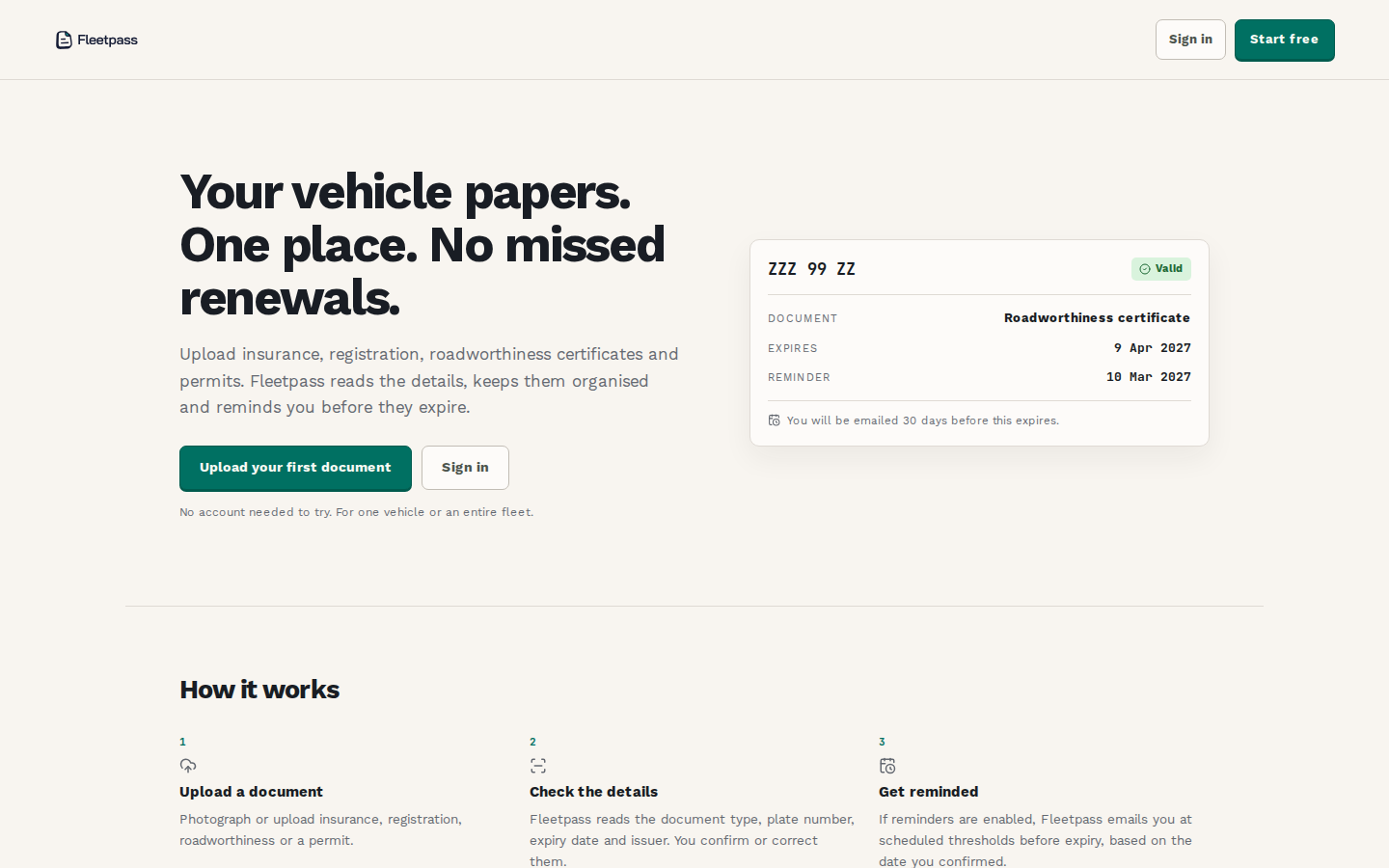
A car owner can learn that registration or insurance expired at a roadside stop. Fleet operators have the same risk multiplied across vehicles, drivers and people responsible for renewals. The basic product question was what needs attention now, before that discovery happens.
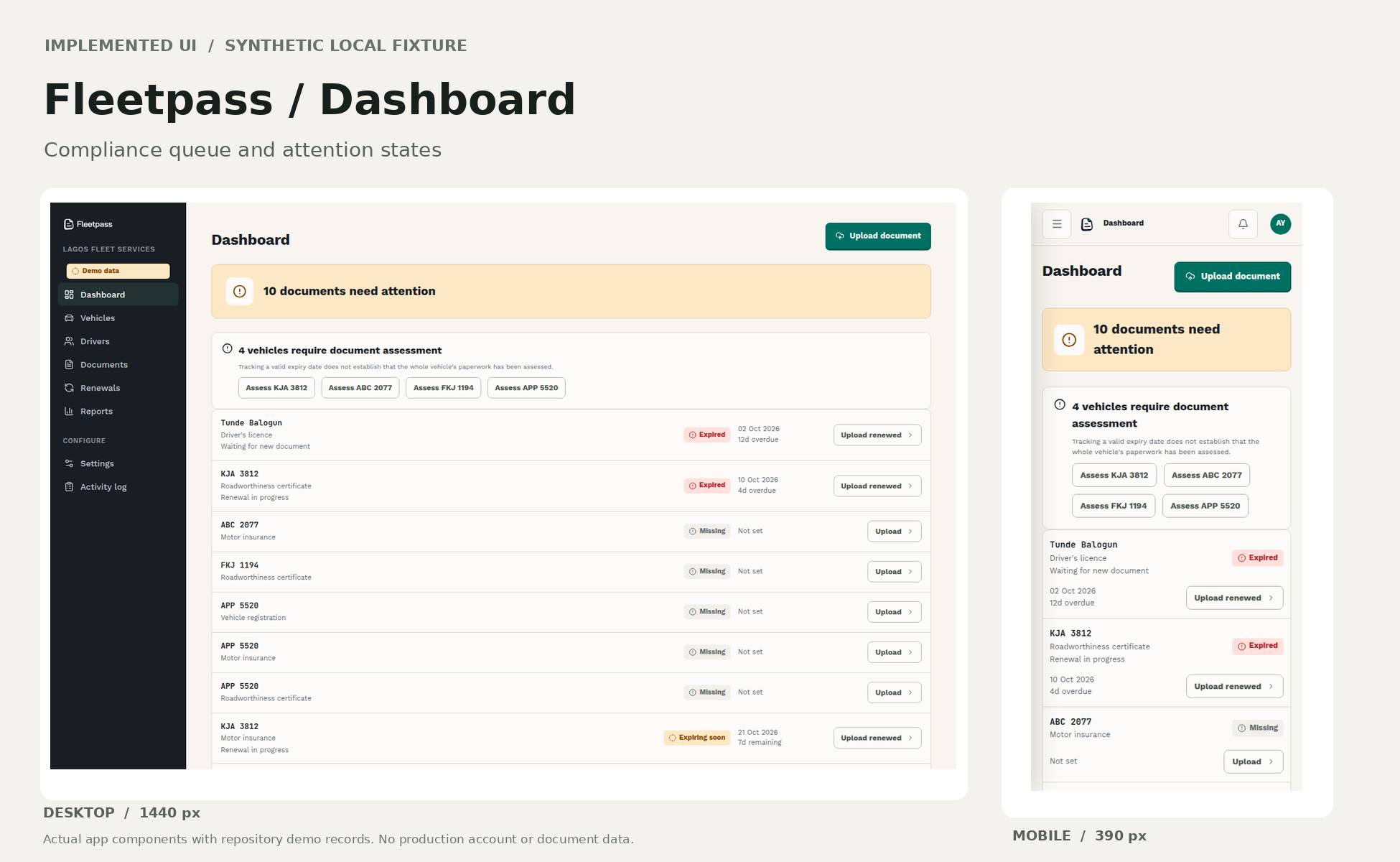
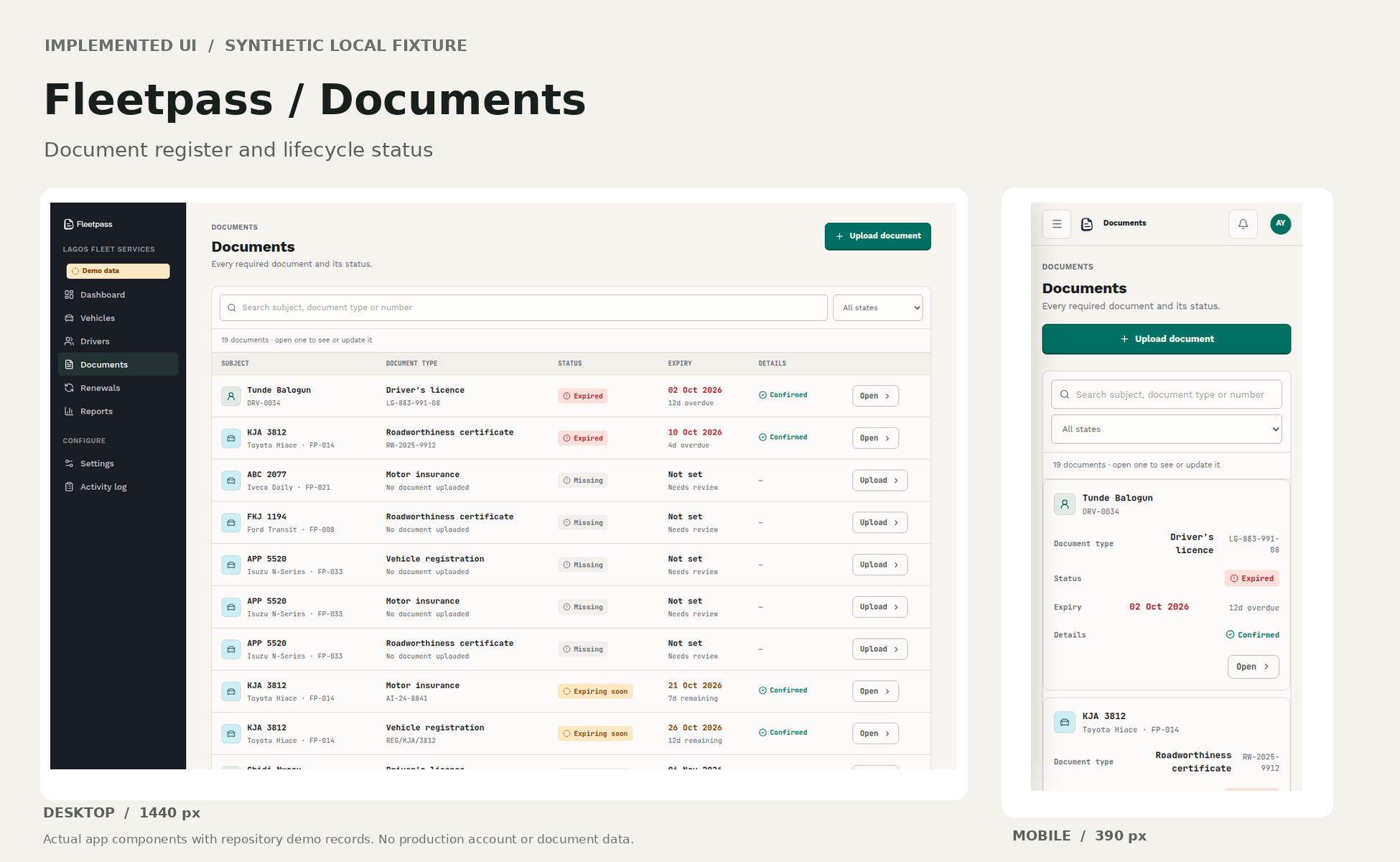
I designed Fleetpass around an urgency-sorted document register, with one vehicle status that reflects the documents underneath it. Missing paperwork remains visible; the system cannot treat silence as compliance.
From one document to a usable record
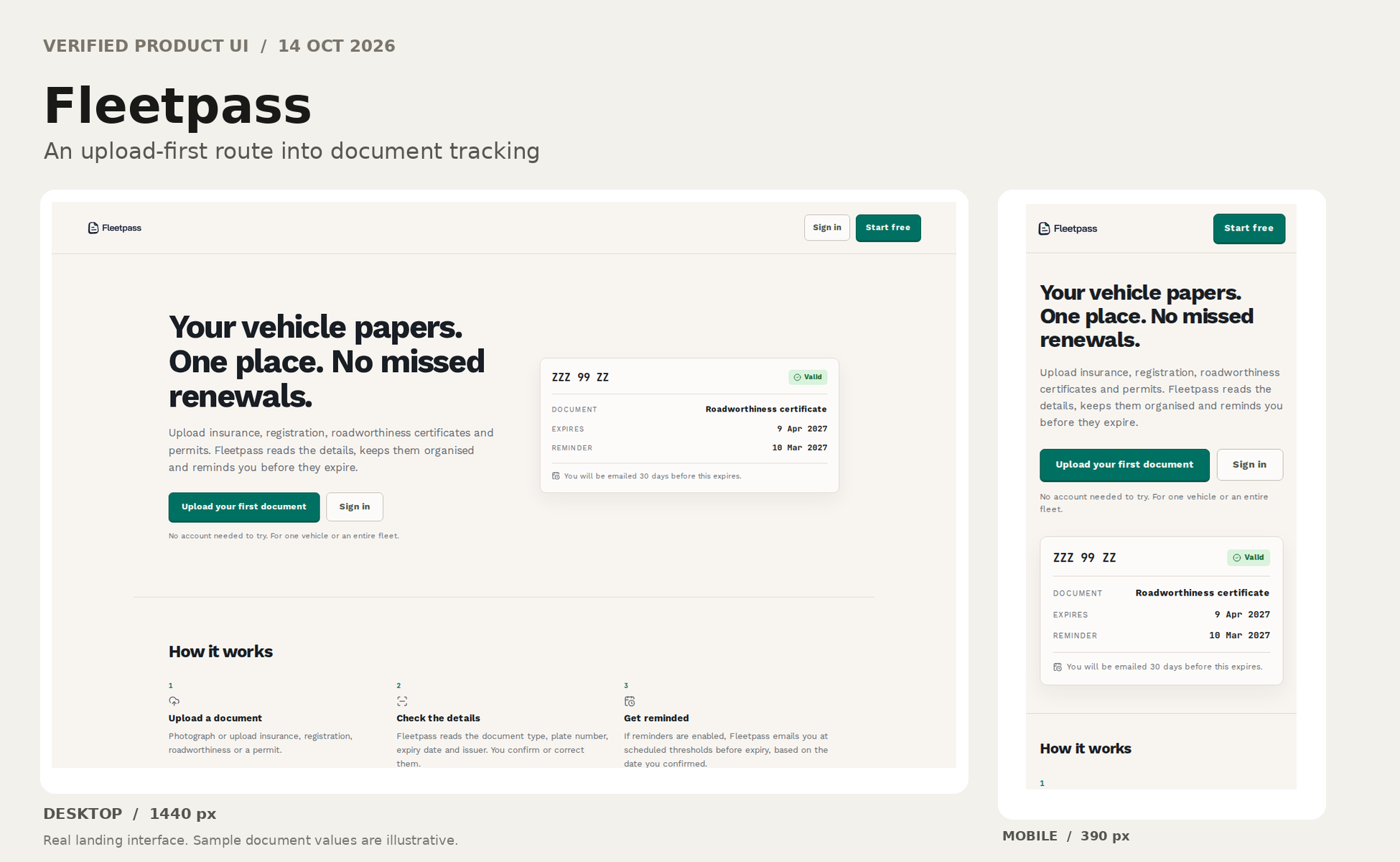
The first upload can create the vehicle record automatically. Fleetpass reads the document type, plate number, issuer and expiry date and asks the user to confirm the extracted details before saving. The uploaded file and the verified metadata stay connected, with their provenance and corrections accessible later.
The decision was to turn a document into an actionable record, without making the user complete a vehicle-registration form first. The same model also needs a recovery route for duplicate or incorrectly uploaded files, including replacement and deletion.
Expiry is an operating state
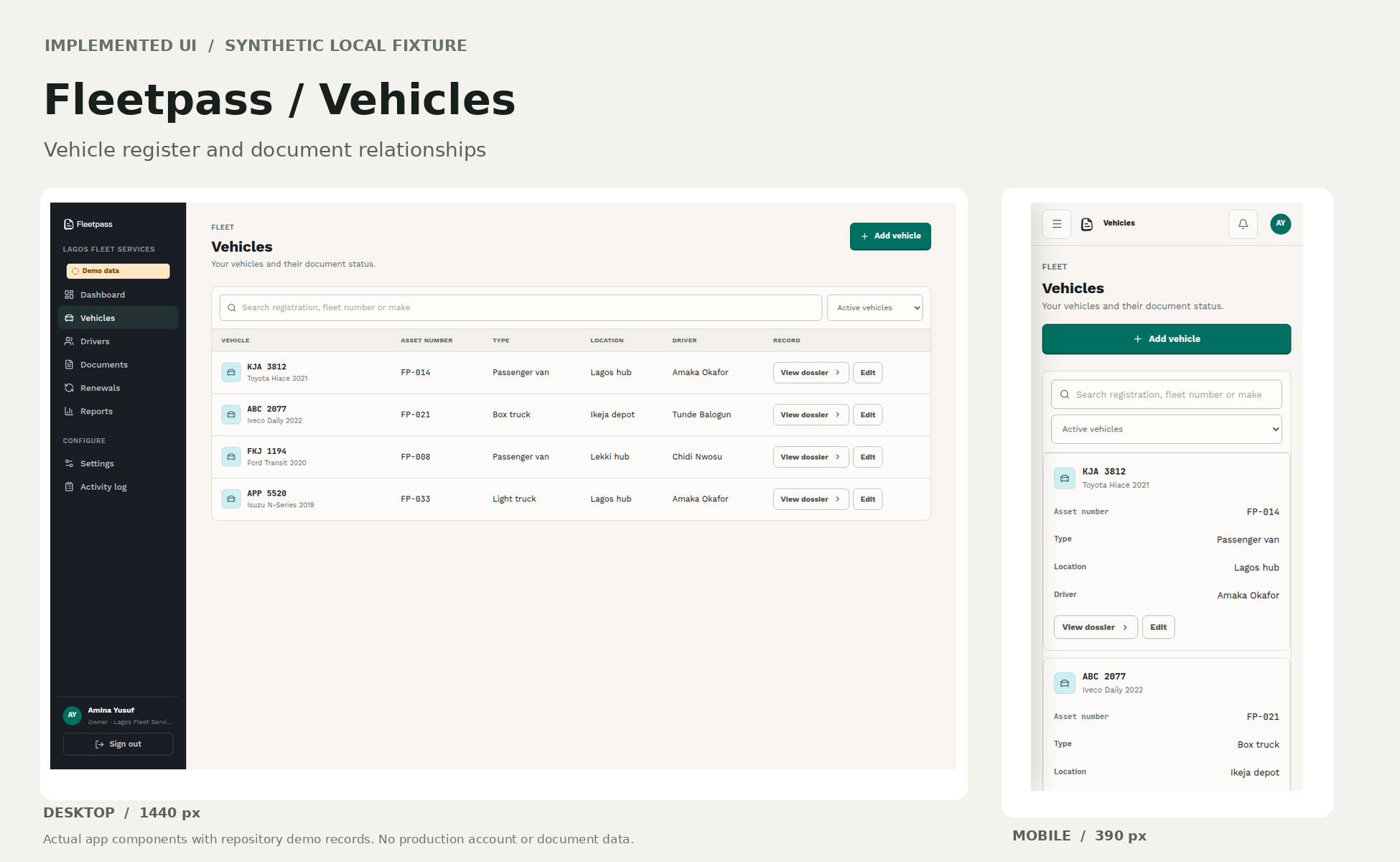
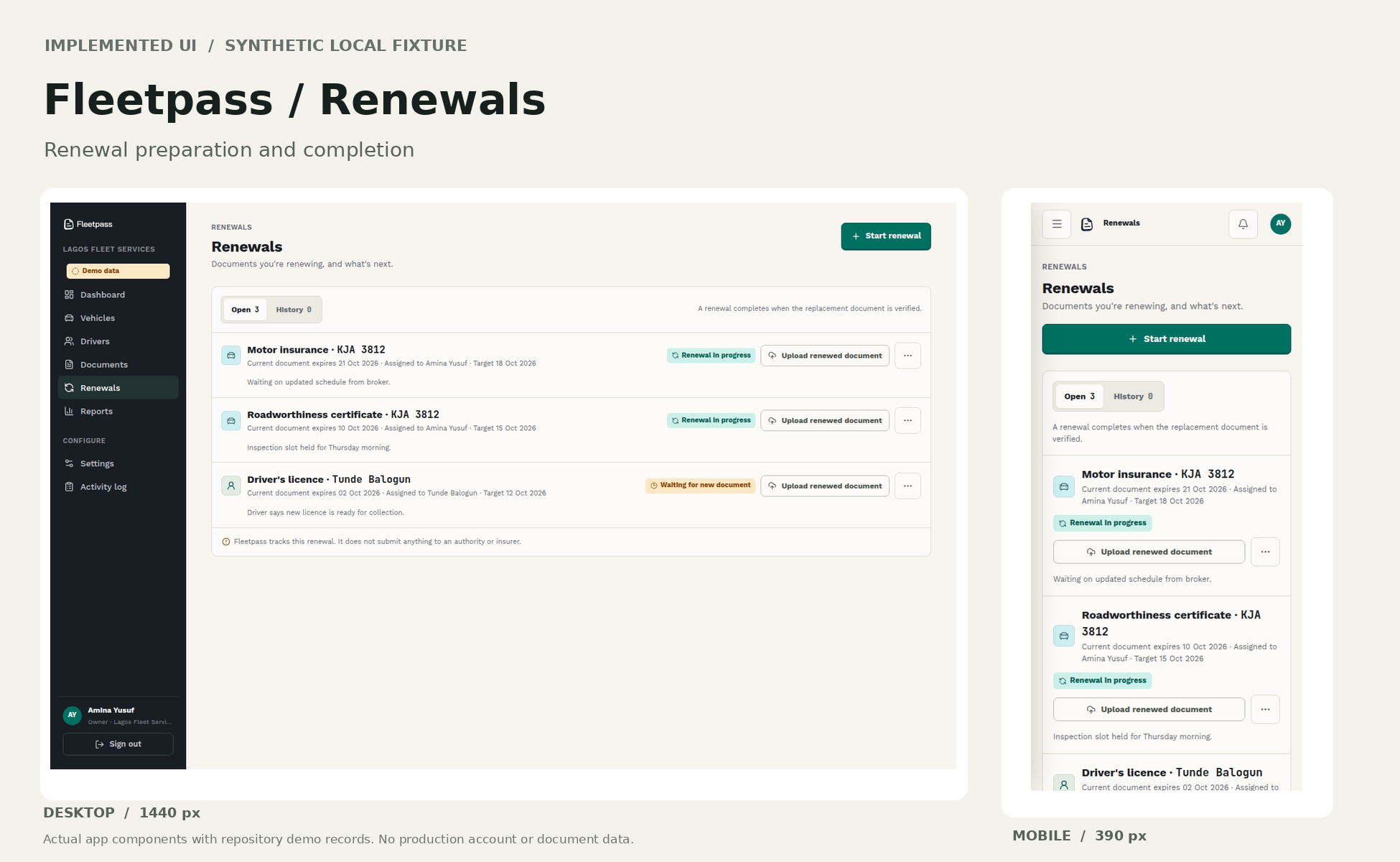
A renewal does not disappear just because someone has started preparing it. The product separates expiring, expired, missing and renewal-in-progress states, with clear owners and reminders before the relevant date. Vehicle and driver documentation belong to their own records while remaining legible in one organisation-level view.
Fleetpass starts with a personal vehicle and extends to shared fleets through organisation membership and access permissions. A manager can work a queue of documents while a viewer should not be able to change what counts as valid.
The implemented workspace, from attention to renewal
The public website explains the upload-first promise. These images show the other half of the design: the real application components that turn verified documents into work for an operator. I ran the repository's local demo with synthetic records in a fresh browser, then captured the same screens at 1440px and 390px.
The dashboard groups missing and expiring requirements by urgency. The vehicle and document registers preserve the source context behind each warning, while renewal preparation stays visible until there is a new confirmed document. Every person, vehicle and date in these four images is fictional test data; the code and responsive UI are genuine.
What is real, and what still needs measurement
The public product at fleetpass.vercel.app supports an upload-first trial and account-based management, and explains the confirmation step before a reminder is set. It is a working product I designed and built using an AI-assisted design-and-code loop.
There is no justified renewal-completion lift or fine-reduction percentage yet. Real measures are confirmed documents, renewal follow-through, reminder delivery and whether a missing record is caught before expiry. Product usage and authenticated end-to-end acceptance need to be measured separately.