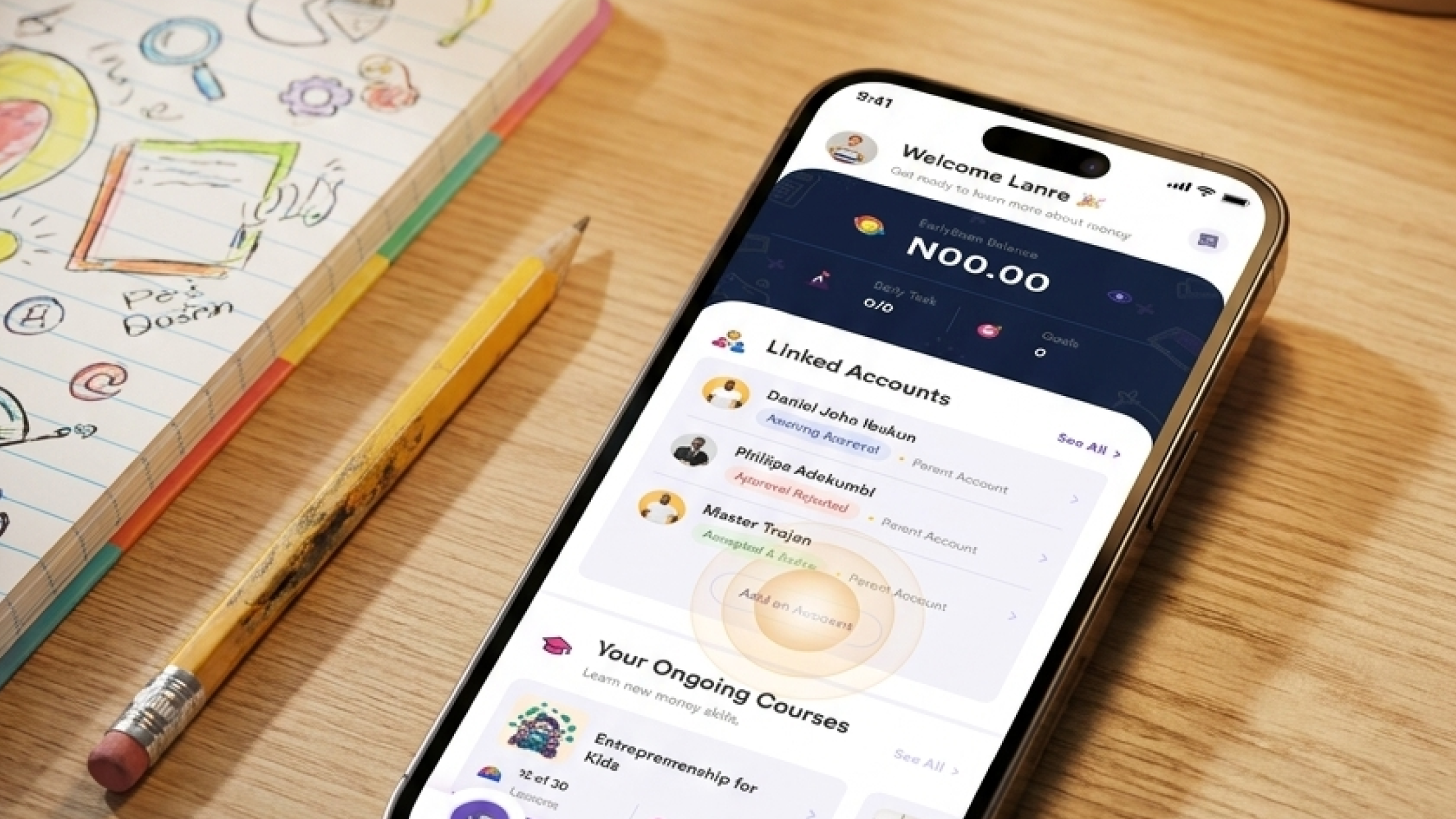
Would you put your money into a farm you’ve never seen?
I joined Farmcrowdy in 2017 as its first design hire. The sponsorship model was already operating; I turned the early WordPress service into a robust product experience across sponsorship, payment, farm tracking, updates and harvest reporting, then expanded into product development, growth, brand and team leadership.
Context
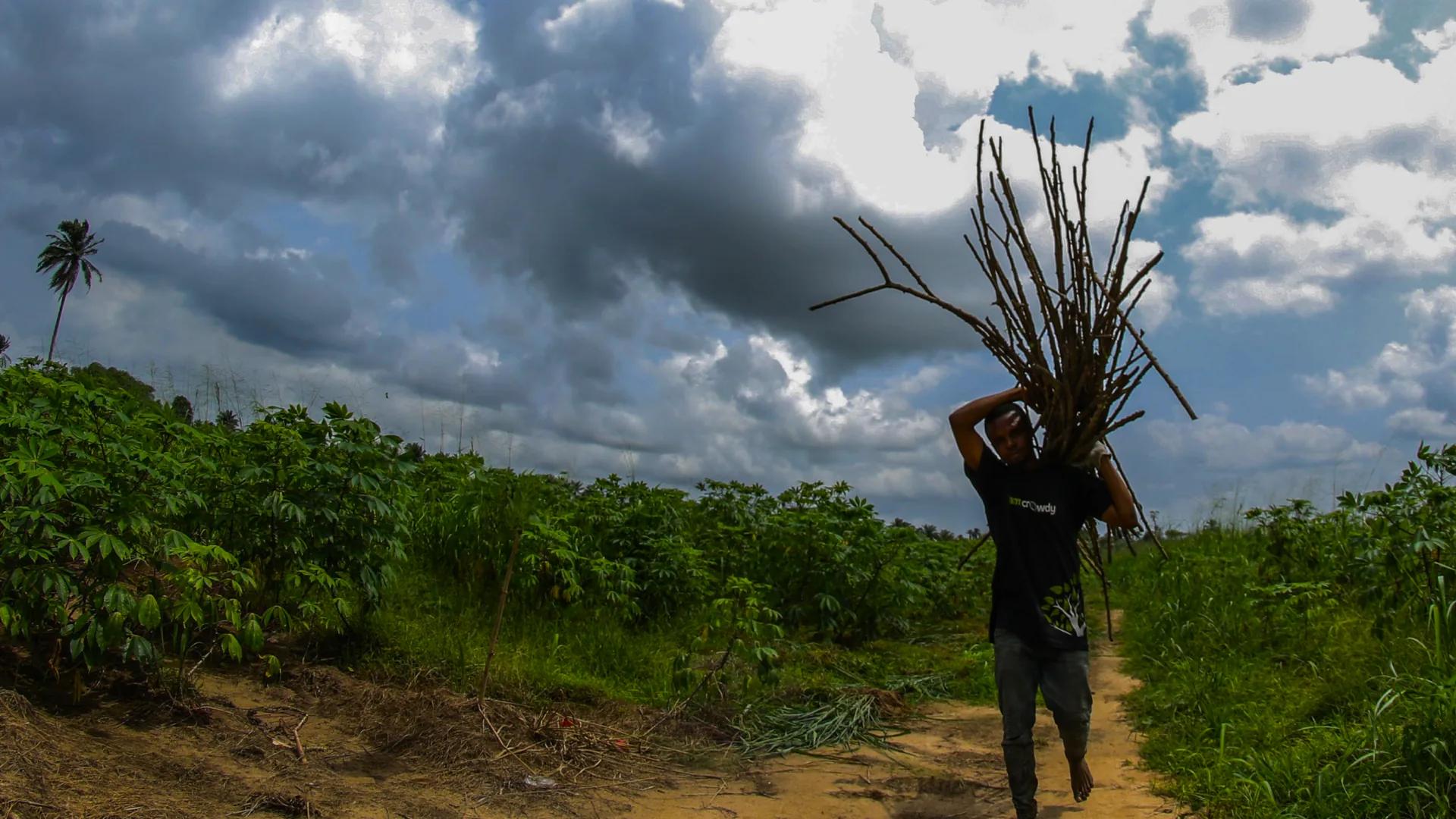
Farmcrowdy launched as Nigeria’s first digital agriculture crowdfunding platform, connecting urban sponsors with smallholder farmers across livestock and crop value chains. I joined in 2017 as its first design hire. The early WordPress service needed the sponsorship tracking, payment, farm-management and reporting systems required by the model.
My task was to turn that early service into a product people could understand and trust, then help the company expand from one platform into a wider agritech ecosystem.
Starting with the public website
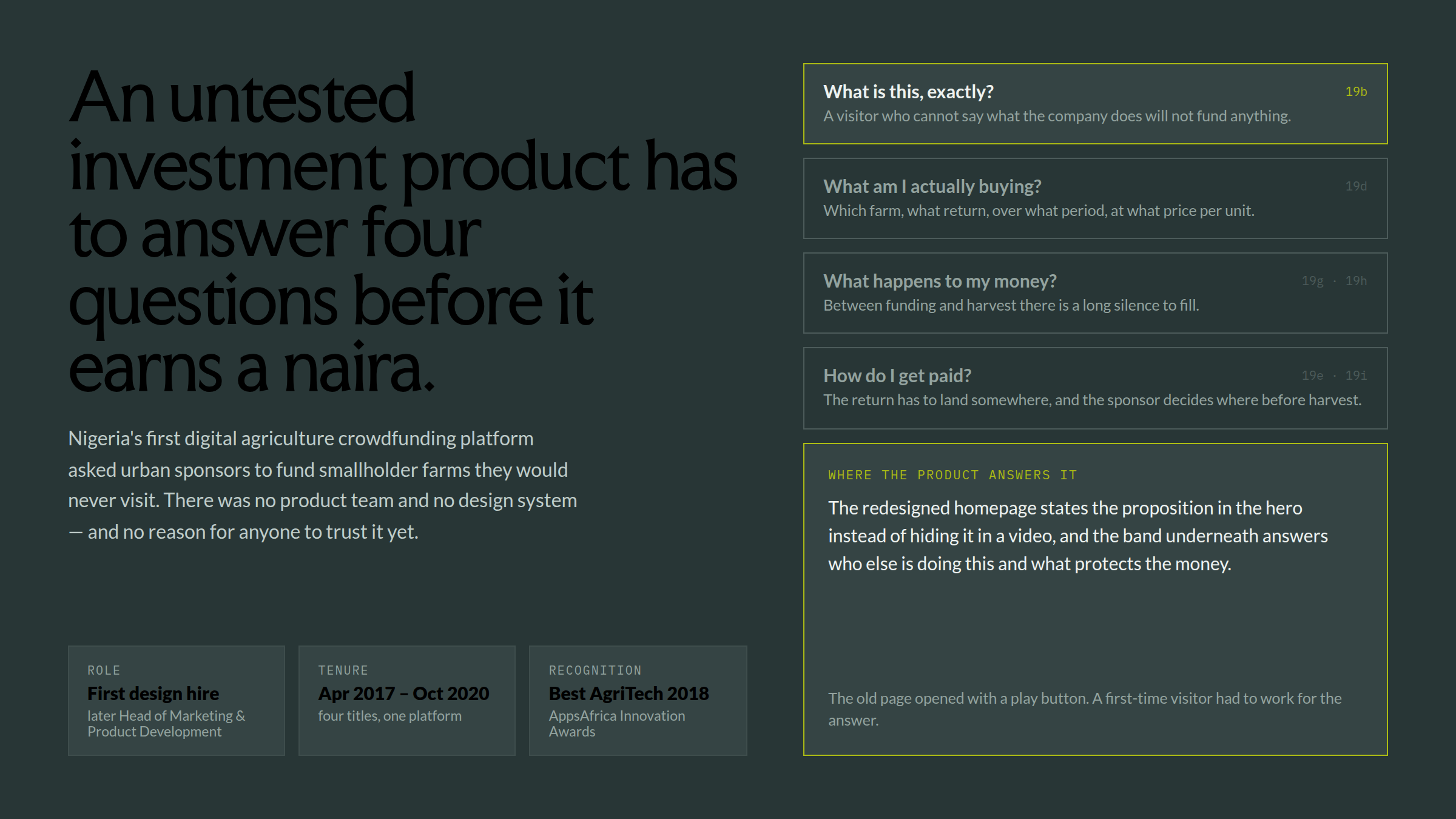
I started the broader redesign with the public website, before moving deeper into the account and sponsorship experience. The brief recorded at the time was a two-month web UX/UI refresh with the UI/UX team: make the site say what the company actually did, and give registered users somewhere to see their account, their transactions and updates from the farms they had funded.
The public page is where that starts. The old homepage asked a visitor to play a video to find out what Farmcrowdy was, and followed it with a row of illustrations carrying no words. The redesign put the proposition in the hero and used the band underneath to answer what a first-time sponsor asks before anything else: who else is doing this, and what protects the money. Separating the public proposition from the account states is what gave the deeper product work somewhere to sit.
Chapter 1 — helping first-time users trust farm sponsorship
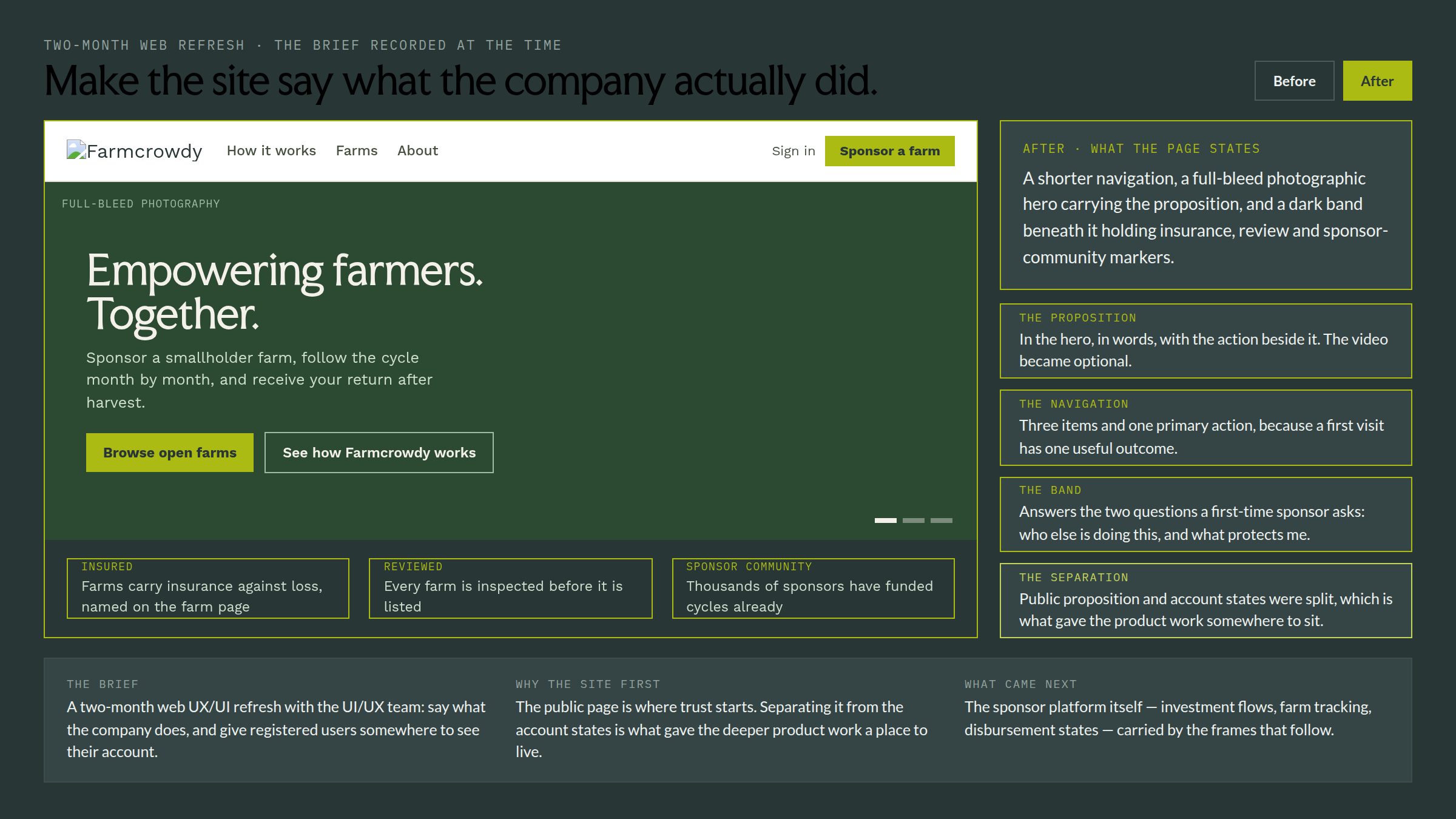
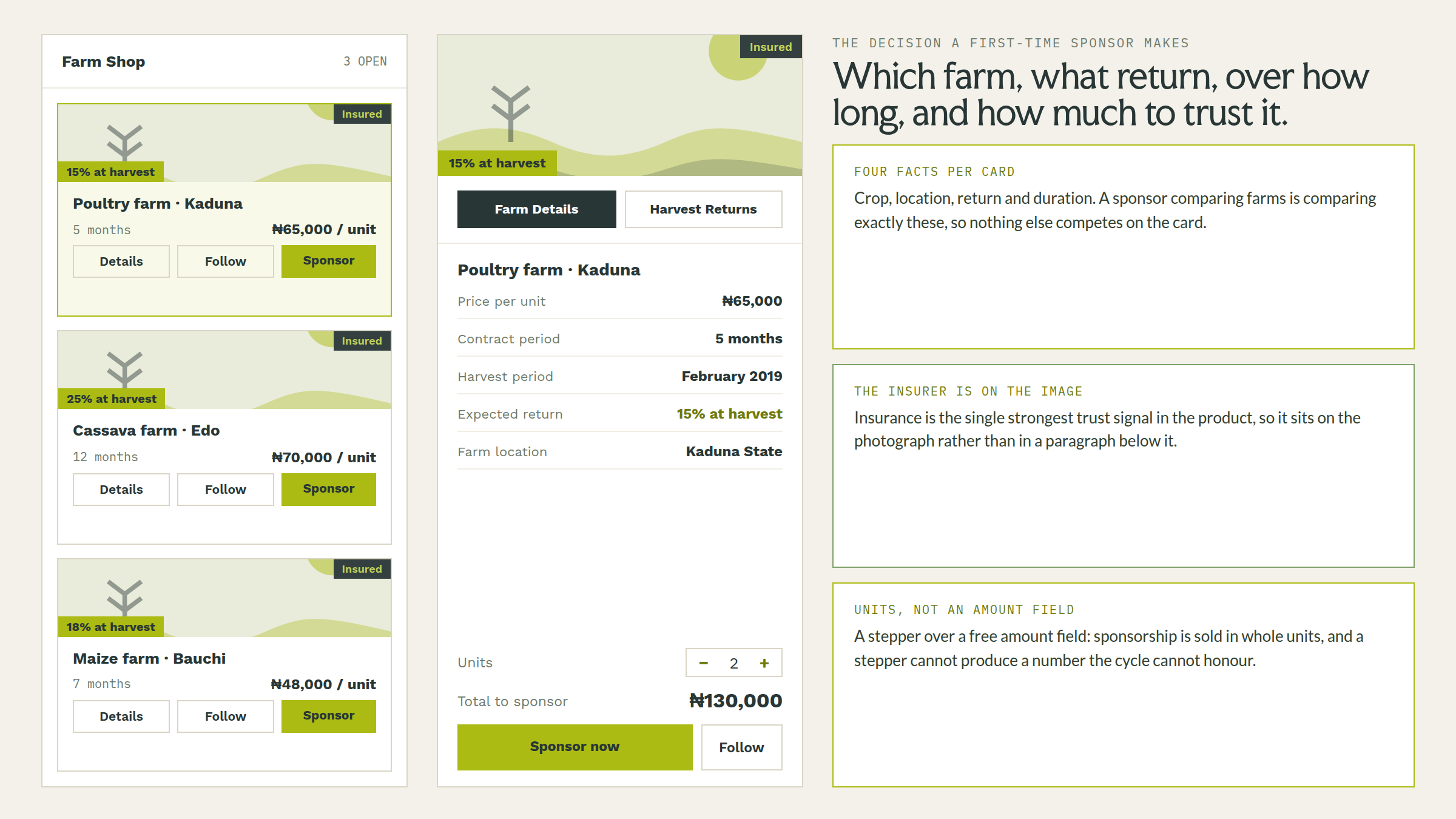
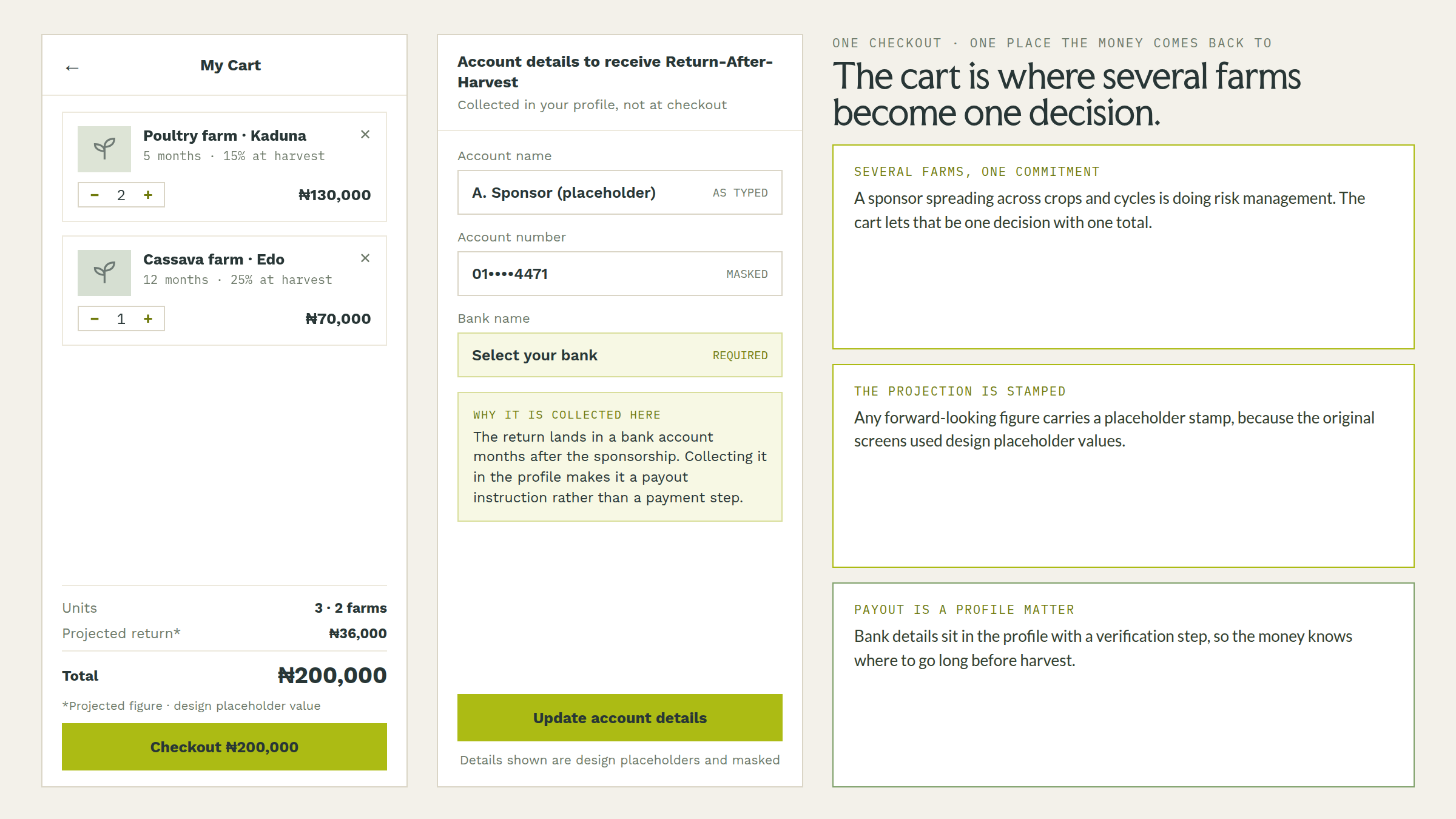
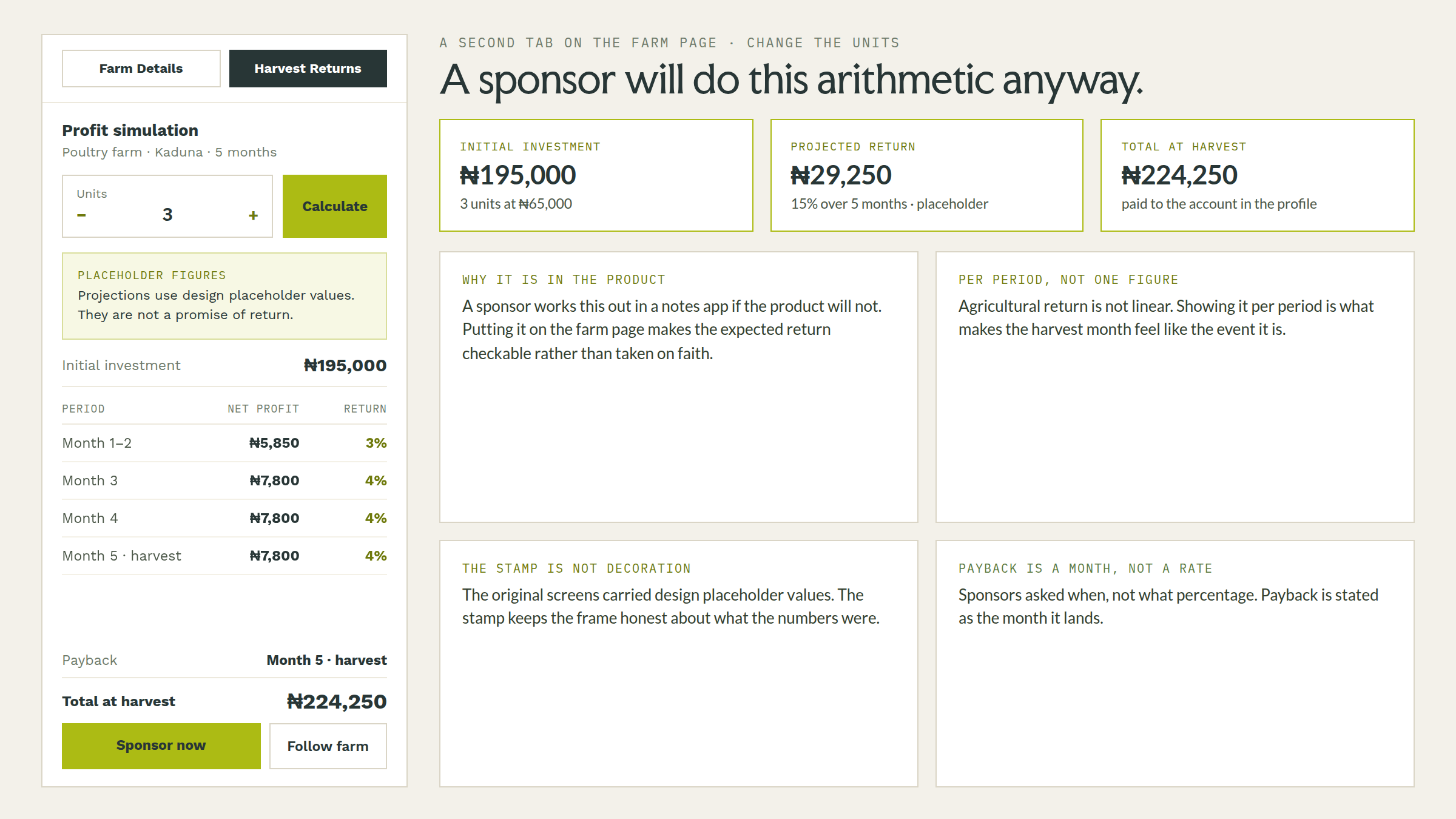
A first-time sponsor had to compare a farm, projected return and cycle length, then commit money to a process they could not inspect directly. I spoke with both farmers and retail sponsors, then designed the sponsor experience across discovery, sponsorship, payment, farm tracking, harvest reporting and the states connecting them, so the product could explain the opportunity, make the transaction legible and maintain confidence through a long farming cycle.
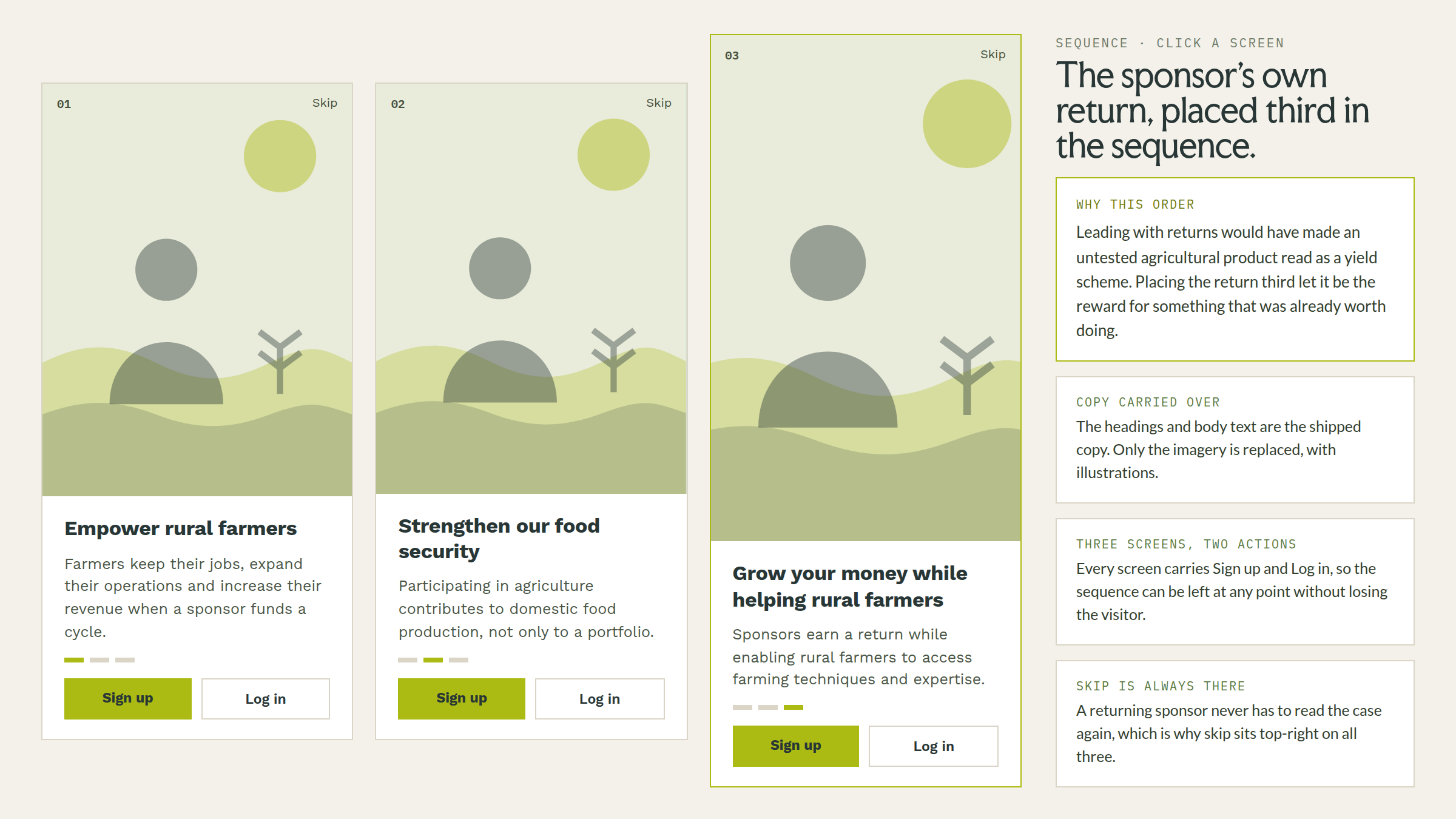
The redesigned mobile journey answered those questions in the order a first-time sponsor asked them: discover a farm and its location, weigh the projected return against the cycle length, then commit an amount and confirm.
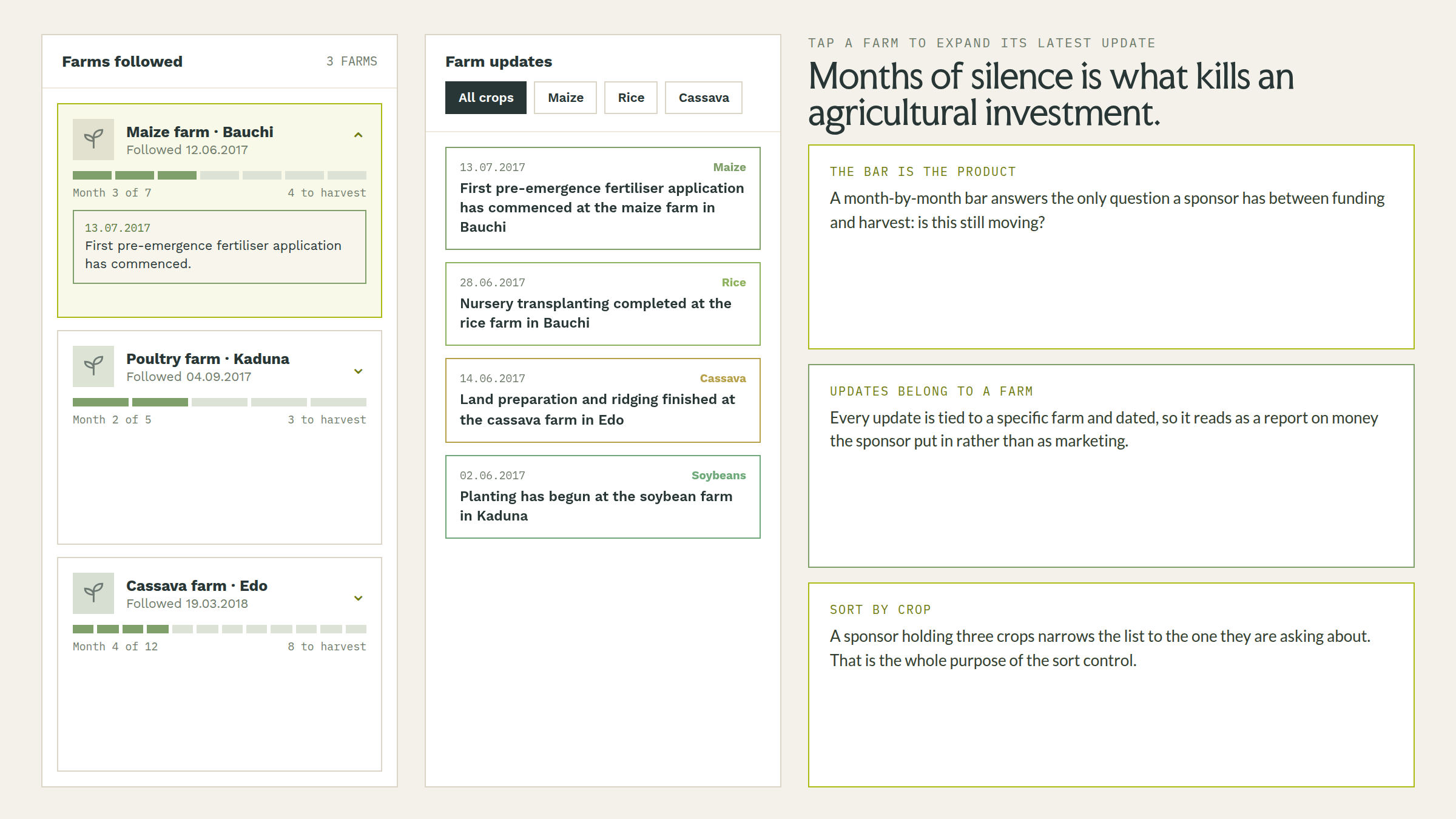
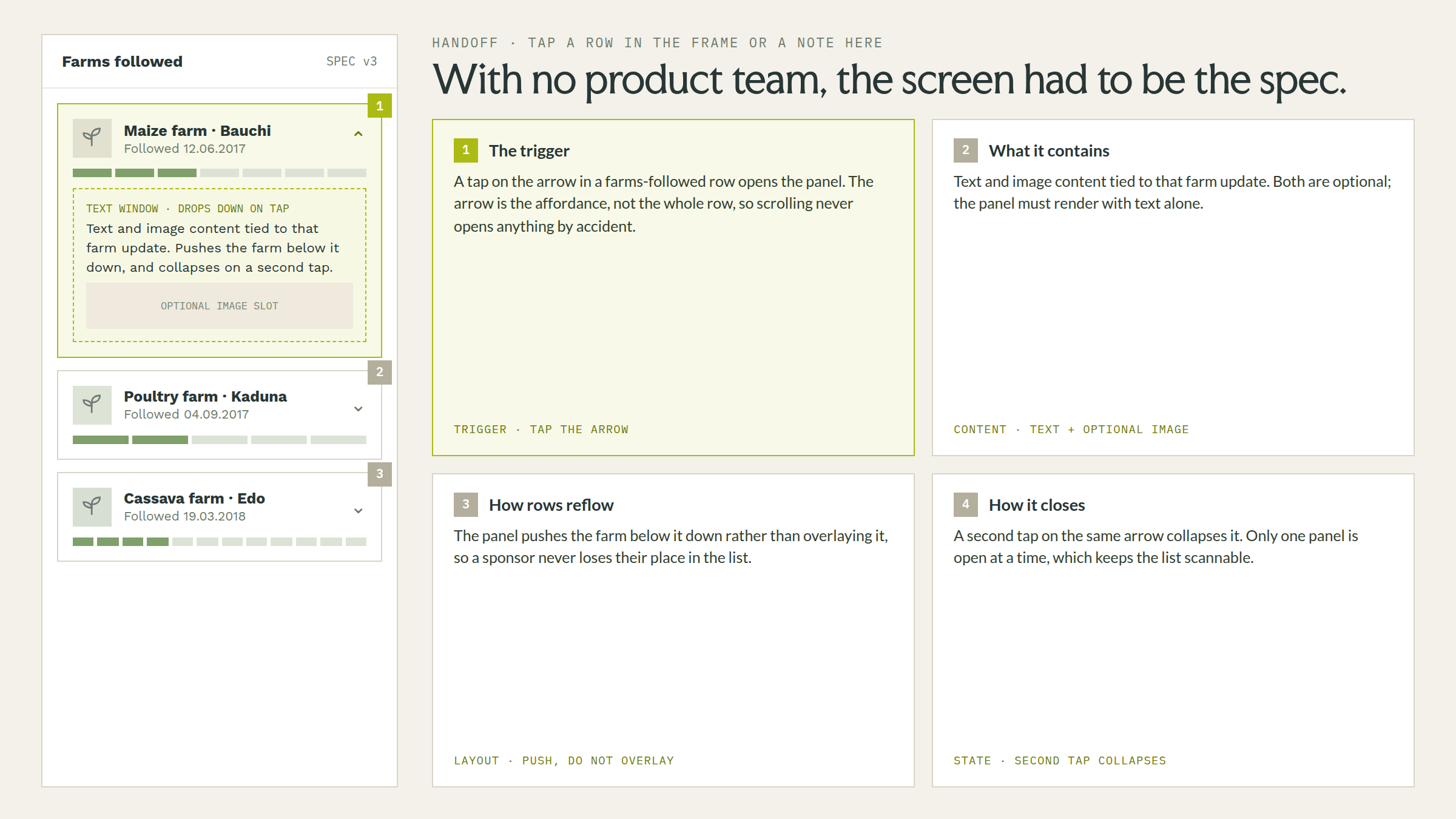
Tracking a farm through its cycle
Months of silence is what kills an agricultural investment. Between funding and harvest a sponsor has one question — is this moving? I designed the tracking surfaces and worked the other side of that trust loop too: visiting farms, speaking with farmers, shooting and editing photo and video updates, then making sure those updates reached sponsors through the product and its communication channels. Some of that field photography remains in my public Unsplash archive; across the full account, it had reached 402,403 all-time views and 4,762 downloads by September 2026.
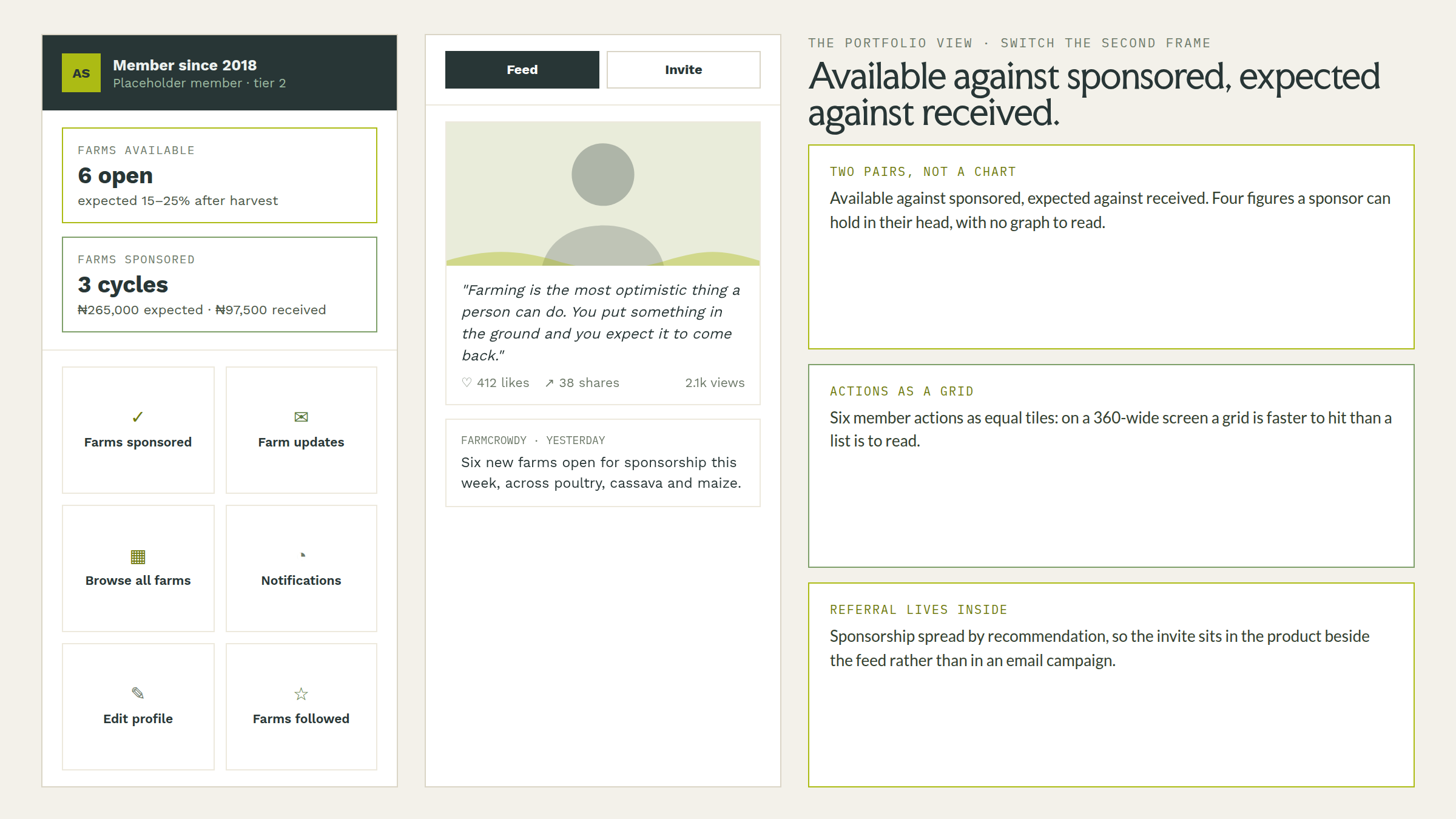
The portfolio view, and growth inside the product
The dashboard is where a sponsor reads their own position: farms available against farms sponsored, and expected return against return received. Four figures, held in the head, and no chart. The same surface also carried the referral link and content feed, making growth part of the product experience.
Chapter 1 result
Internal mobile-funnel tracking recorded sponsorship conversion moving from 18% to 60% during my tenure. The redesigned journey below shows the product changes made across that period.
Chapter 2 — product, growth and team leadership
As the platform scaled, I built and owned Farmcrowdy’s brand and marketing infrastructure across web, social, press, campaigns and events, while hiring and managing a multidisciplinary team across product/design, front-end, analytics, performance marketing, marketing and PR. Tracked sponsorship volume grew from $1.86M to $9.14M and 45,000+ customers were acquired during the wider product and growth period.
The wider company was also gaining external validation during this period. Farmcrowdy received a GSMA Ecosystem Accelerator Innovation Fund grant in February 2018, and during Vice President Yemi Osinbajo’s April 2018 Lagos technology tour he sponsored ten maize farms through the platform.
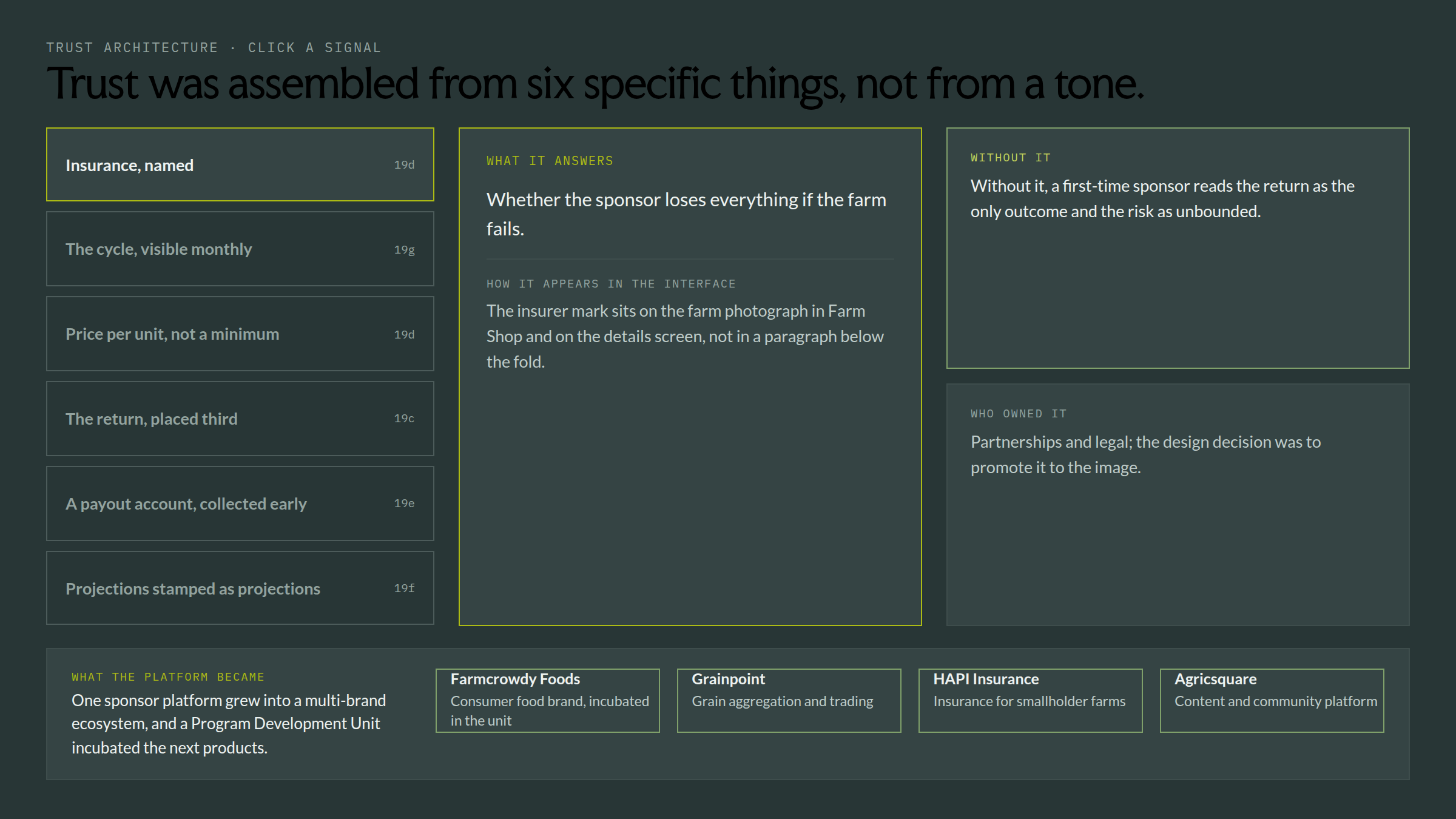
I led product and content direction for Agricsquare, Farmcrowdy’s content and community platform, as it grew into a large online agricultural community with dedicated full-time coordinator and content roles. In 2020 the company formally created the Program Development Unit — responsible for product development, donor-funded programme identification and new-product incubation — and I led it, working across product definition, partnership design and programme structure for Farmcrowdy Foods, Grainpoint and HAPI Insurance.
The core judgment stayed consistent as my role expanded: a first-time sponsor is deciding whether to trust an unfamiliar category. Every surface therefore had to answer what the farm is, what the return is, over what cycle, where the money goes in between and where it lands at the end. That sequence at the point of commitment became the foundation for the later product, brand and programme work.