Farmcrowdy V1 — Pioneering Digital Agtech Investment
First version of Farmcrowdy's digital agriculture investment platform — bringing smallholder farm sponsorship online and making agricultural investment accessible to urban Nigerians.
"How might we enable urban professionals to confidently invest in rural farming operations they've never seen, managed by farmers they've never met, in an industry they don't understand — without precedent mental models?"
Backstory
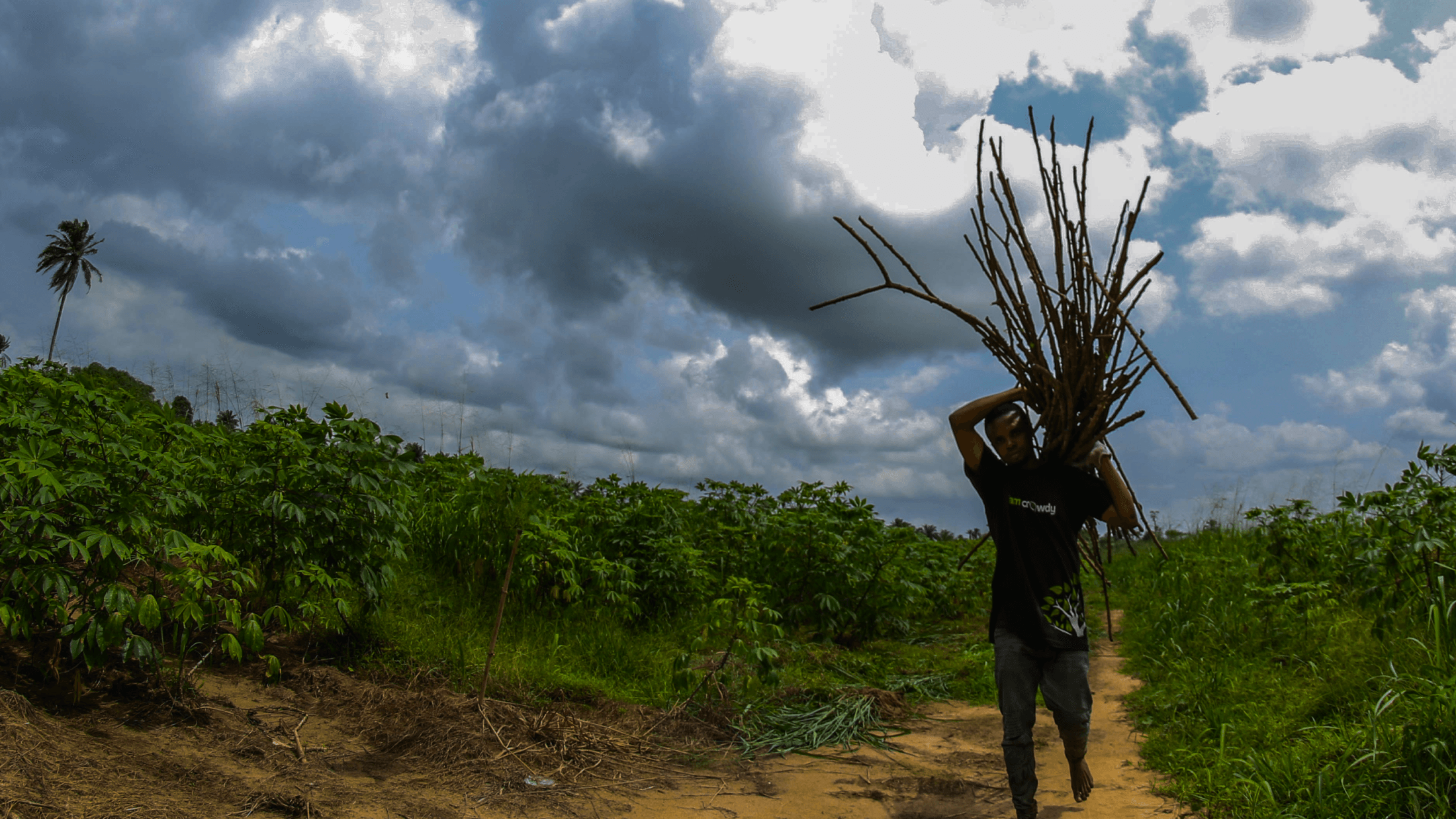
Nigeria has 66 million smallholder farmers. Lagos has an urban middle-class with capital to invest. Agriculture has better ROI than most Nigerian banks. But there was no bridge between these two worlds.
Existing agtech platforms focused on farmer education or supply chain logistics. No one had built a consumer-facing investment platform. No precedents. No mental models. No existing UX patterns to steal.
I had to invent the entire experience from scratch.
The Challenge
Trust Without Transparency
How do you convince someone in Lagos to send ₦50,000 to sponsor a rice farm in Kano they'll never visit, managed by a farmer they'll never meet, with crops they can't verify exist?
No Mental Models
Agriculture crowdfunding didn't exist anywhere in the world. Users had no reference point. Is this like Kickstarter? Is it like buying stocks? Is it charity? How do returns work?
Explaining the Unknown
Most urban Nigerians don't understand farming cycles, crop yields, or agricultural economics. The product had to educate while reducing cognitive load.
My Role
As Founding Product Designer (first design hire), I owned:
- Discovery & Research — Interviews with potential sponsors and farmers to understand trust barriers
- Product Strategy — Defining the sponsorship journey, information architecture, and interaction patterns
- Visual Identity — Brand system, logo, color palette, photography style
- Experience Design — Every screen from landing page to checkout to dashboard
- Testing & Iteration — Prototype testing with target users, iterating based on feedback
Design Principles
1. Trust Through Transparency
"If I can't see it, you need to show me everything." — Principle that drove every design decision. Since users couldn't physically verify farms, the UX had to do the verification for them. Every farm had detailed specs: location, crop type, farm size, expected yield, farming method, timeline.
2. Familiarity in Novelty
Borrowed patterns from e-commerce (product cards, "Add to Cart") and crowdfunding (funding progress bars, "Support this project"). Made the unknown feel familiar.
3. Simplicity Over Comprehensiveness
Progressive disclosure. Only show what users need at each step. Don't front-load complexity. Let them learn as they go.
4. Designing for the Exception
Farming isn't predictable. Crops fail. Yields vary. The UX had to normalize uncertainty rather than hide it. Honest communication builds trust.
The 12-Screen Sponsorship Flow
Farm Selection (3 screens)
- Browse farms — Card-based grid, filterable by crop type, location, investment amount
- Farm detail page — Hero image, farm specs, timeline visualization, expected ROI calculator
- "How does this work?" explainer modal for first-time users
Trust Signals (embedded throughout)
- Farm verification badge
- Number of previous successful harvests
- Farmer profile with photo and bio
- Insurance coverage indicator
- Timeline showing exactly when returns would be paid
Checkout Experience (4 screens)
Deliberately slow. Not optimized for speed — optimized for confidence. Each step reinforced the investment decision with additional information and confirmation points.
Impact
Within 12 months of launch, three copycat platforms emerged using nearly identical UX patterns. The sponsorship flow I designed became the industry standard.
What I'd Change
Looking back, I'd invest more in educational content upfront. Many users still didn't fully understand farming cycles even after sponsoring. A more robust onboarding sequence with interactive farming timeline education would have increased repeat sponsorship rates earlier.